


What the data actually says.
Every week, Discover reads a real cultural moment and finds the story underneath it — the one a keyword scan walks right past. These are those stories. No fluff, no 40-page playbooks. Just what the data is actually telling you.

If a finding doesn't make you pause, it didn't go deep enough.
A Discover Pulse report is a finite read on a real moment.
We point our Contextual Intelligence platform at a topic — a viral jingle, a fashion revival, or a trend nobody can quite explain — and we read the whole conversation.
Then we tell you what's actually going on.
Most tools count mentions and tag sentiment. That tells you how loud a conversation is, not what it means.
Pulse Reports read volume, sentiment, and narrative together — catching the difference between people who hate your product and people who are furious they can't find more of it.
Those look identical to a basic keyword scan.











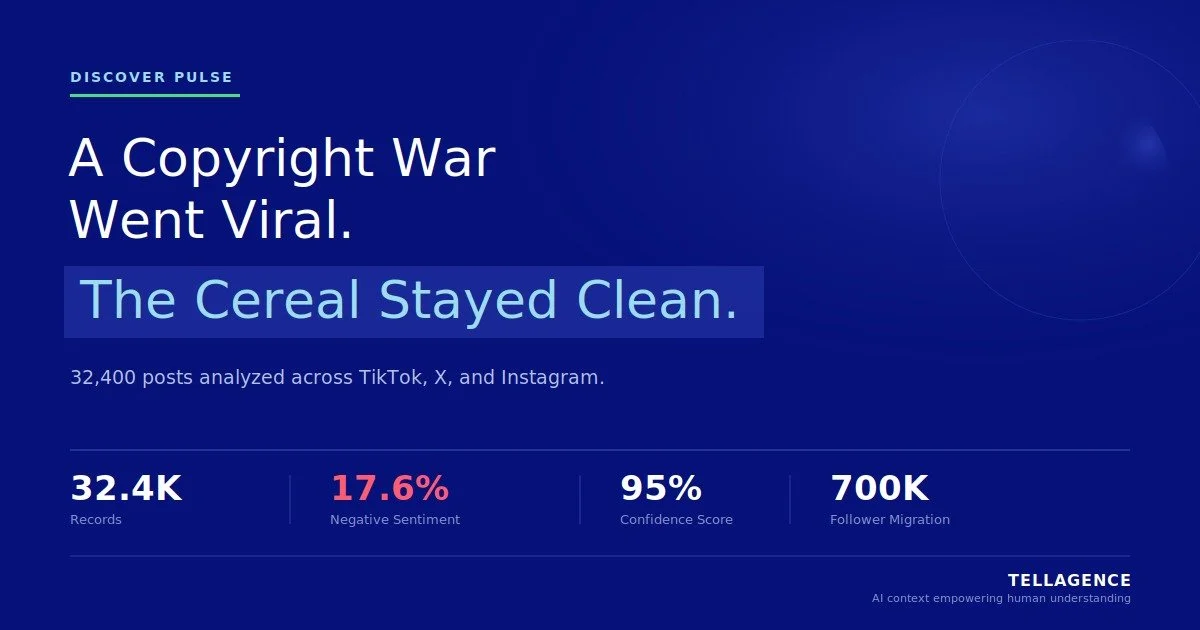
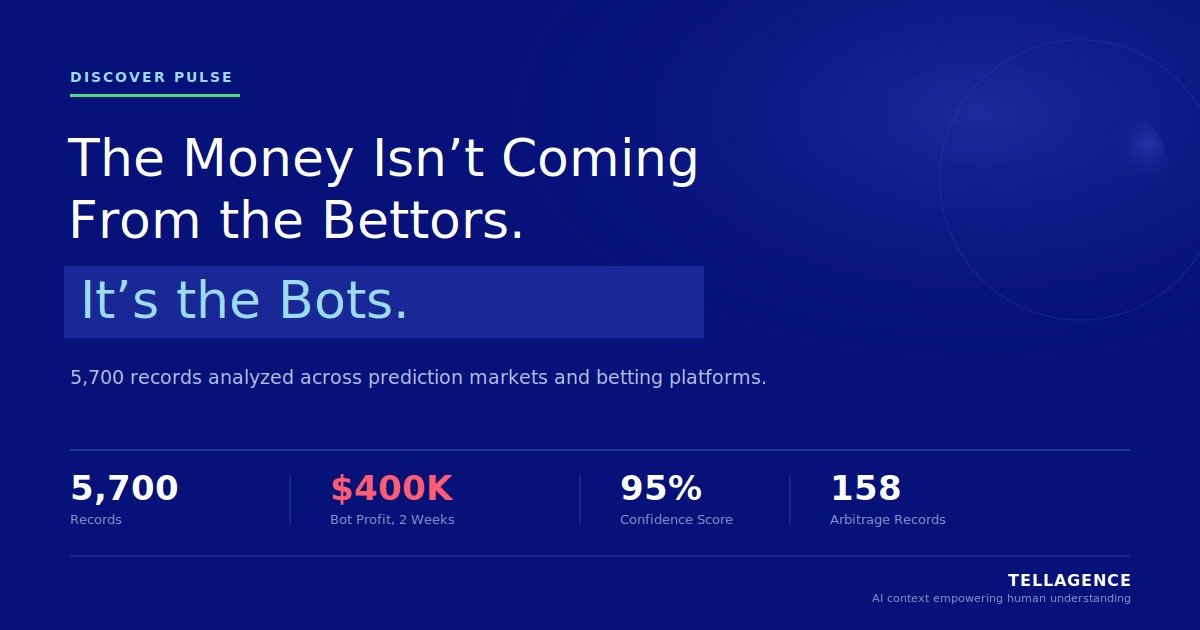
Here's a real example.
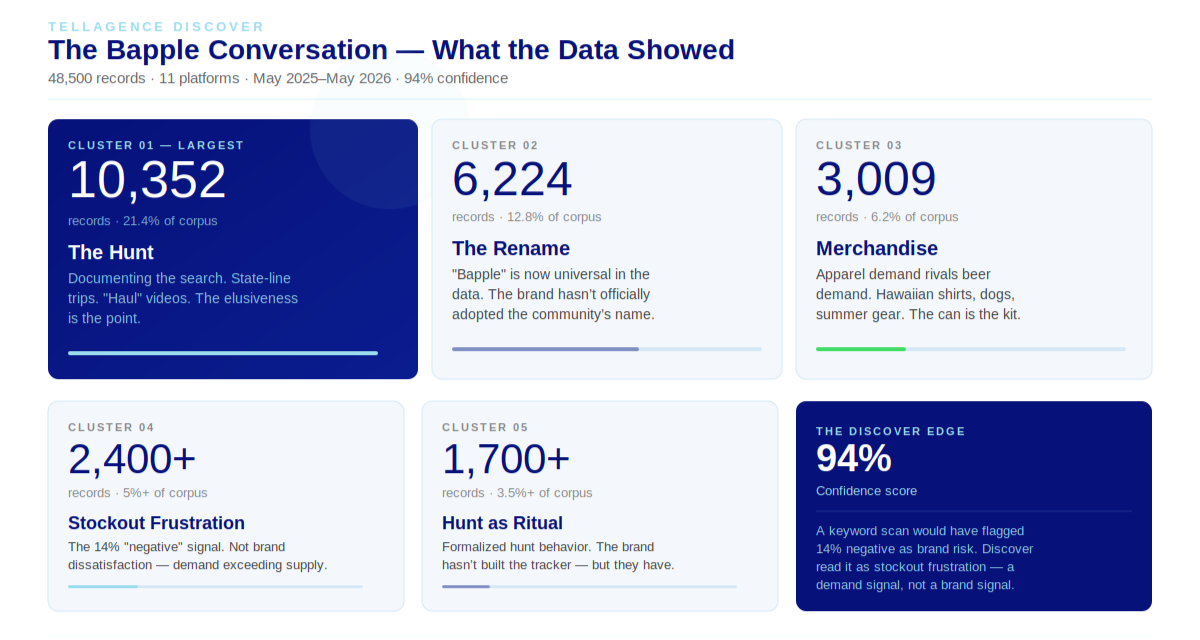
In our Bapple analysis, 14% of the conversation was negative. A standard sentiment tool flags that as a brand health problem and recommends intervention. But when we read what the negative conversation was actually about, almost all of it was stockout frustration — people furious they couldn't find more, not unhappy with what they got.
That's the whole difference. "14% negative" sends you into damage control. "Demand is outrunning supply" sends you to the factory. Same number. Opposite move.
Reading context instead of just counting sentiment is what tells you which one you're actually looking at.
The part other tools walk right past.

This isn't magic. It's published science.
Everything you just read comes out of a contextual intelligence framework we built ourselves. If you want to see how the engine under these reports actually works, the research is all there.
Run one on us!
Want to see what Discover has to say about your brand?
Every Pulse report on this page started as a question someone was curious about. If you're wondering what your audience is actually saying — or what a competitor's audience is saying — we can point Discover at it and find out.