

A Squishy Toy Went Viral. Then Kids Went to the Hospital.
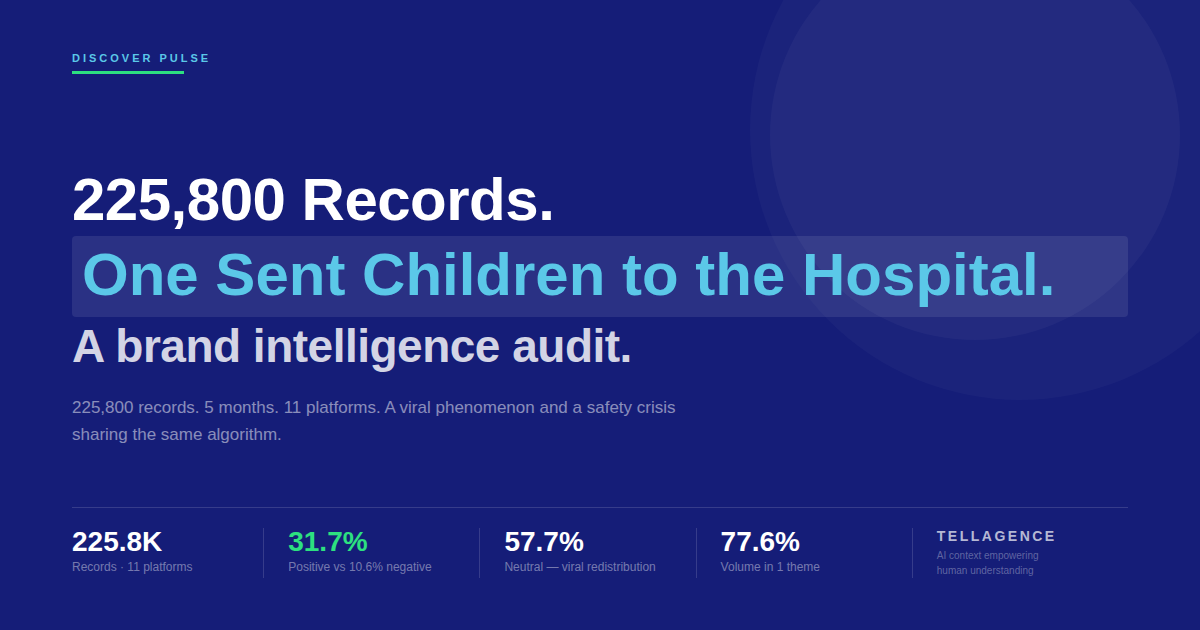
A five-month Discover audit of Needoh across 11 platforms finds a product with extraordinary viral reach, a 3:1 positive sentiment ratio, and a microwave safety crisis spreading through the exact same algorithm that built the brand's growth.
225.8K records analyzed · 31.7% positive sentiment
57.7% neutral (viral noise) · 77.6% viral phenomenon theme
Theme 1 in this dataset holds 175,300 records. It covers every unboxing video, ASMR clip, collector haul, and squishTok post that made Needoh one of the most talked-about toys in the country. Theme 11 holds 1,844 records. It documents a TikTok challenge in which children microwave the toys, causing explosions and second-degree burns. Both themes live on the same platforms. Both spread through the same algorithm. The brand didn't build either of them.
Tellagence Discover analyzed 225,800 verified records across Facebook, Instagram, TikTok, YouTube, Threads, Bluesky, Snapchat, Discord, Twitch.tv, Pinterest, and Reddit from January to May 2026. The 3:1 positive-to-negative ratio among valenced records is real. So is the microwave crisis. The headline sentiment reads comfortable. The cluster-level picture does not.
What the data actually showed
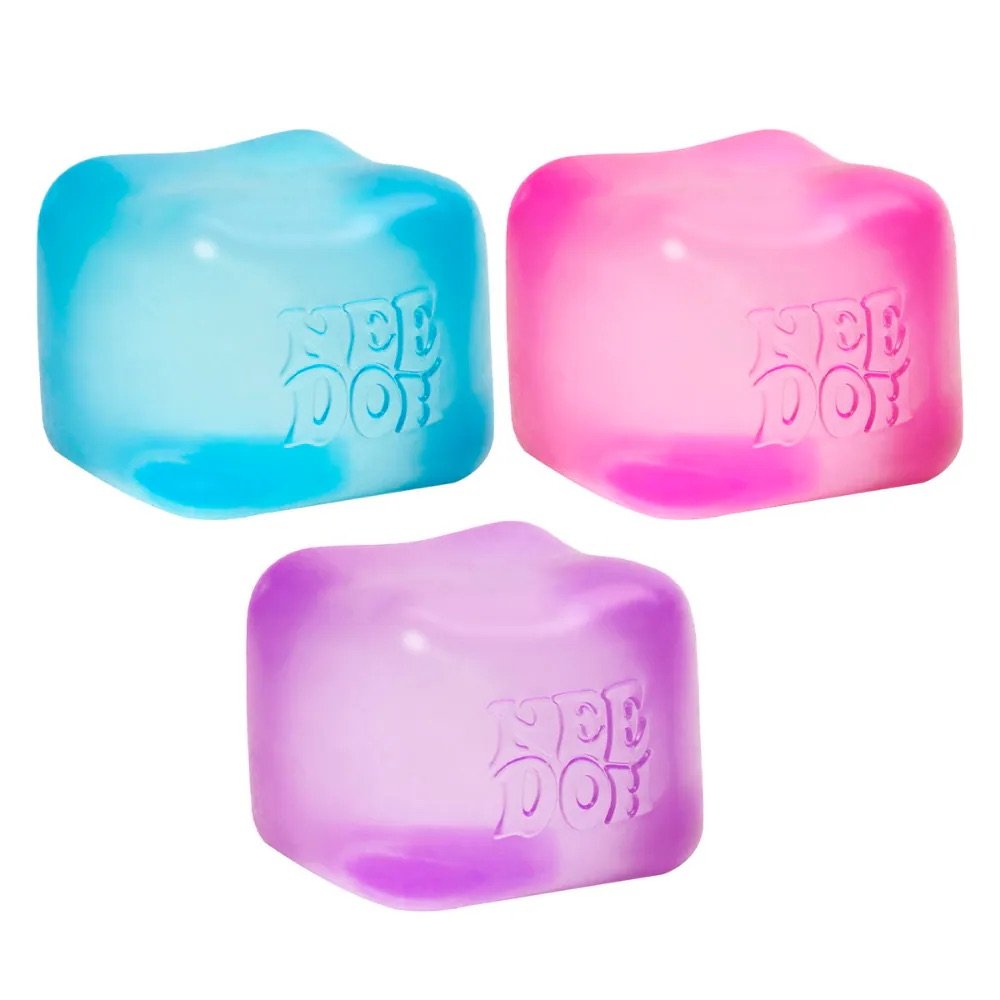
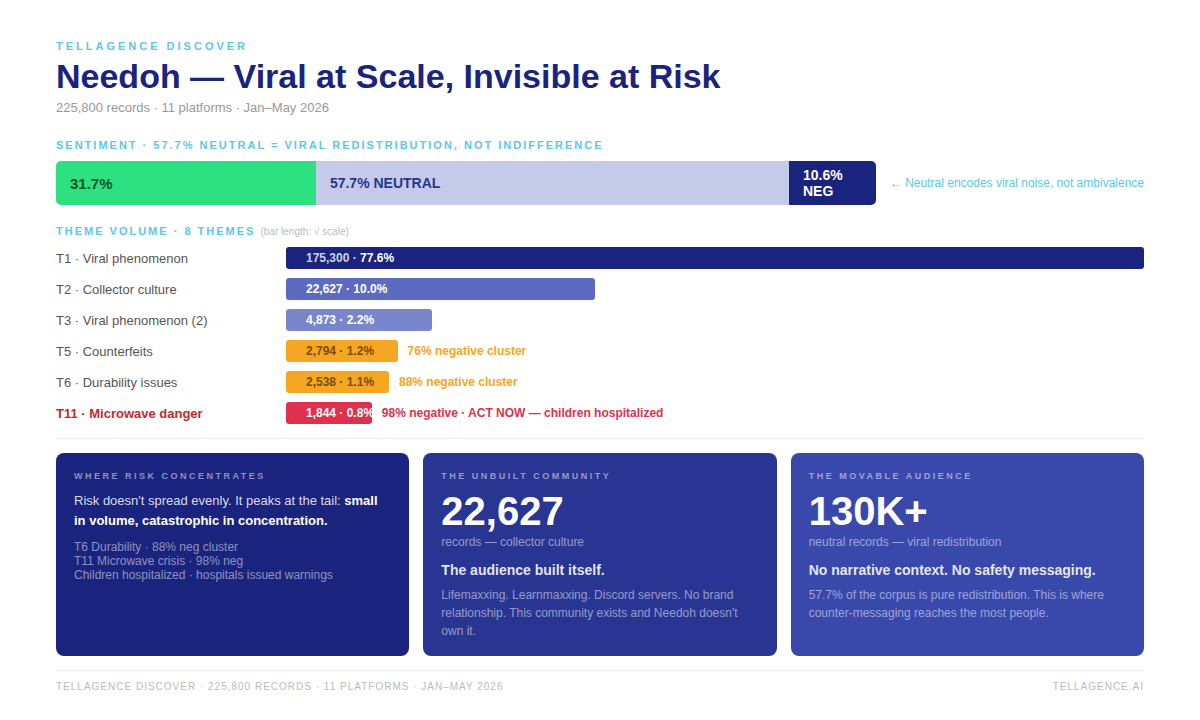
1. Needoh's growth model depends entirely on content it does not control. Theme 1 (175,300 records, 77.6% of the corpus) is almost entirely user-generated: unboxing videos, sensory ASMR clips, collector vlogs, and haul showcases. The squishTok community built its own content grammar — cutting, squishing, modifying — that generates millions of views without a single brand brief involved. Needoh benefits from earned media at extraordinary scale. None of that content carries safety context. None of it could, because none of it comes from Needoh.
2. Collector culture has made these toys emotionally significant, and that cuts both ways. Theme 2 (22,600 records) documents a dedicated community undertaking multi-store "Needoh hunting" expeditions to find limited editions. Cluster 8 (1,900 records, 81% positive) and Cluster 45 (335 records, 80% positive) describe Needoh as "life-enriching." Cluster 30 (491 records, 95% negative) captures users posting RIP tributes when their toys break. That depth of emotional attachment means every durability failure registers as a personal loss. These aren't product complaints. They're small griefs.
3. Durability failures are the largest concentration of negative sentiment in the corpus. Cluster 37 (407 records, 88% negative) documents bursting, leaking, melting, and color-bleeding products. These records do not spread evenly the way viral neutral content does. They concentrate. An 88% negative density at that cluster size is a structural problem, not an isolated batch of bad reviews.
4. The microwave challenge requires immediate action. Story 42 holds 197 records at 98% negative. It documents the TikTok microwave challenge, hospitalized children, and hospital-issued safety warnings. This trend spread through the same algorithmic mechanics that distribute Needoh's positive content. A packaging label and a platform takedown request address the symptom. Counter-messaging through the same creator network that amplified the trend is the structural fix — and it cannot wait for the other strategic choices to be made.
WHAT A STANDARD TOOL WOULD HAVE MISSED:
The corpus headline reads 31.7% positive, 57.7% neutral, 10.6% negative. By any conventional benchmark, that's a healthy brand. But it’s misleading in two specific ways.
The 57.7% neutral stat isn’t indifference. It reflects a deliberate choice not to force polarity onto viral redistribution content — unboxing reposts, haul video reactions, ASMR clips that generate views without expressing any opinion about the product. Forcing sentiment onto that content would have inflated the positive figure and buried the crisis signals underneath it.
The negative signals sit in clusters, not in themes. The counterfeit market (Cluster 19, 76% negative), the durability failures (Cluster 37, 88% negative), and the microwave crisis (Story 42, 98% negative) are all small in total record count. Each one is concentrated at a level that makes the theme-level average actively misleading.
A top-down audit of this dataset would have ranked content types and reported on TikTok growth. The structural pattern — uncontrolled virality operating as both asset and liability — surfaces only when the corpus self-organizes first. Bottom-up segmentation is what places the microwave crisis in the same report as the viral growth engine. That co-location is the insight.
Three choices — not five instructions.
A. Build an owned community, or stay a passive beneficiary. The collector community (22,600 records) organizes across TikTok, Discord, and Reddit without a brand-owned space. An official hub with trading, early access, and showcasing converts scattered social engagement into a first-party data relationship. Staying decentralized costs less. It also means the brand's most passionate users — the ones who grieve broken toys and hunt across multiple stores for specific editions — remain in relationships with platform algorithms, not with Needoh.
B. Make quality improvement a brand story, not a quiet fix. Durability is the single largest driver of concentrated negative sentiment in the corpus. A transparent improvement campaign — public benchmarks, before-and-after product comparisons, direct acknowledgment of the complaint category — converts a repair cost into earned trust. A silent fix improves the product. It earns no credit, and it leaves the durability narrative in the hands of users who still remember the burst ones.
C. Use the viral creator network to counter the microwave challenge. The creator safety program is higher-cost and draws attention to an incident the brand might prefer to minimize. The alternative — labels and platform takedown requests — is slower and doesn't address the algorithmic root. The same creators who made squishTok the brand's growth engine can distribute safety messaging through the same channels the challenge used to spread. This is the one choice in the report that can't follow the others. It goes first.
All three choices share a root: Needoh needs an owned narrative layer between itself and the algorithm. A and B build that layer over time. C requires it now.