

What 60.4K #RushTok Mentions Reveal About Brands on Greek Row
Behind every viral TikTok trend lies an unwritten rule: The audience will let you join the party, but they will drag you if you ruin the vibe.
During the summer 2026 recruitment season, major enterprise brands stepped off the sidelines and straight onto Greek Row. Instead of buying traditional banner ads or running generic social campaigns, brands like Nike, Altar'd State, and Coca-Cola directly funded sorority choreographies, outfit hauls, and experiential setups.
To a standard listening dashboard, #RushTok 2026 looked like a home run: 60.4K mentions and a staggering +42% net sentiment overall. But beneath that sunny surface, Tellagence Discover uncovered sharp cultural friction points. When chapters co-opted hip-hop anthems for sponsored routines or flaunted excessive wealth, the broader internet retaliated.
TL;DR —
The Quick Catch-Up
The Activation/Event: Enterprise brands like Nike, Coca-Cola, and Altar'd State stepped onto campus to directly fund sorority recruitment content, outfits, and experiential setups.
The Viral Spectacle: Branded activations drove massive engagement and a +42% overall net sentiment, peaking at 28.9K mentions in a single week.
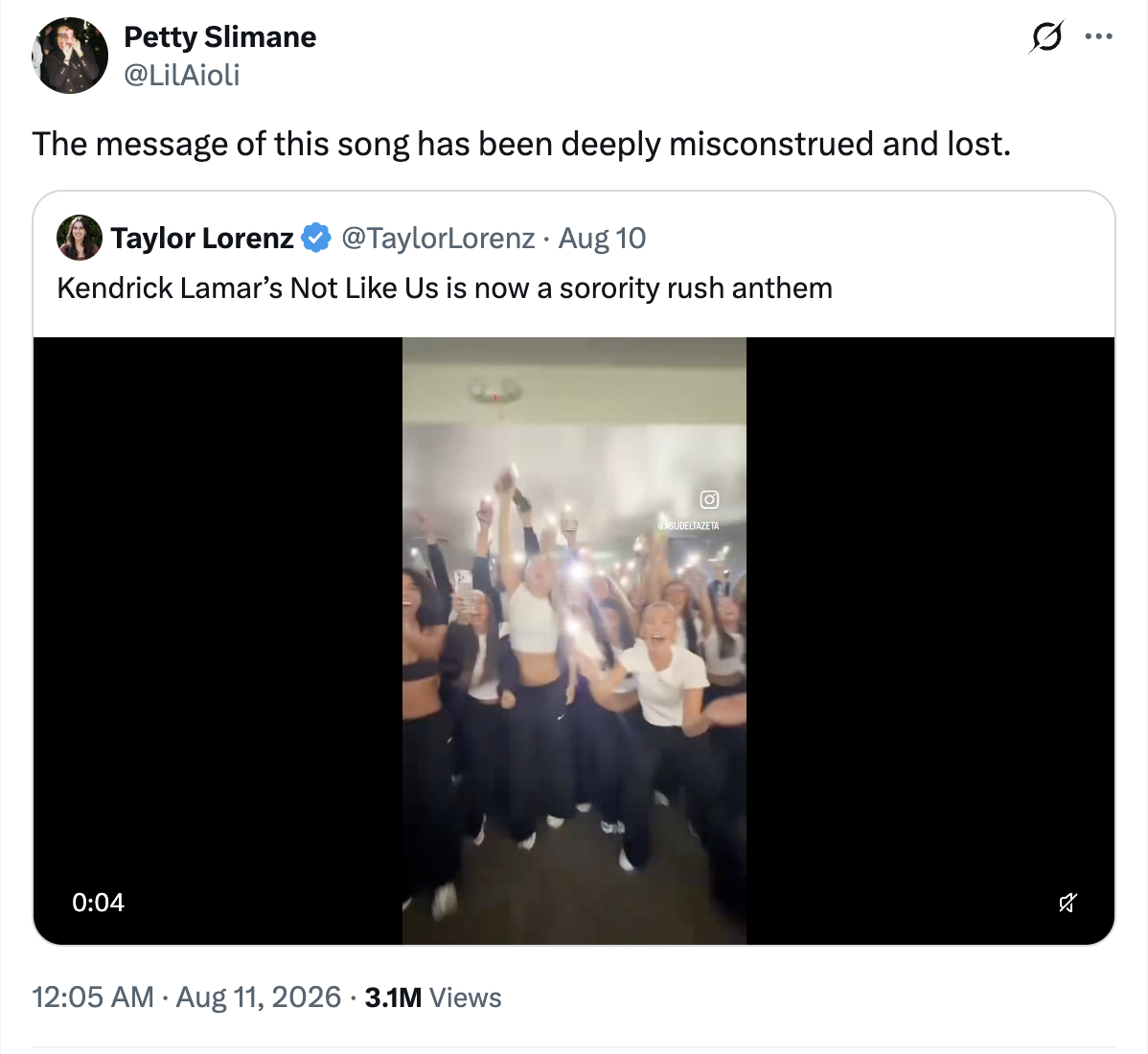
The Conflict/Backlash: Outrage sparked when chapters used Kendrick Lamar’s "Not Like Us" for sponsored dance routines (-69% net sentiment), while non-Greek audiences pushed back on the extreme financial costs of sorority life (-28% net sentiment).
The Intelligence Takeaway: Gen Z welcomes brands funding their creative output, but internet culture aggressively polices cultural appropriation and overconsumption.
What the Data Actually Showed
1. Brands Successfully Bought into the Sisterhood
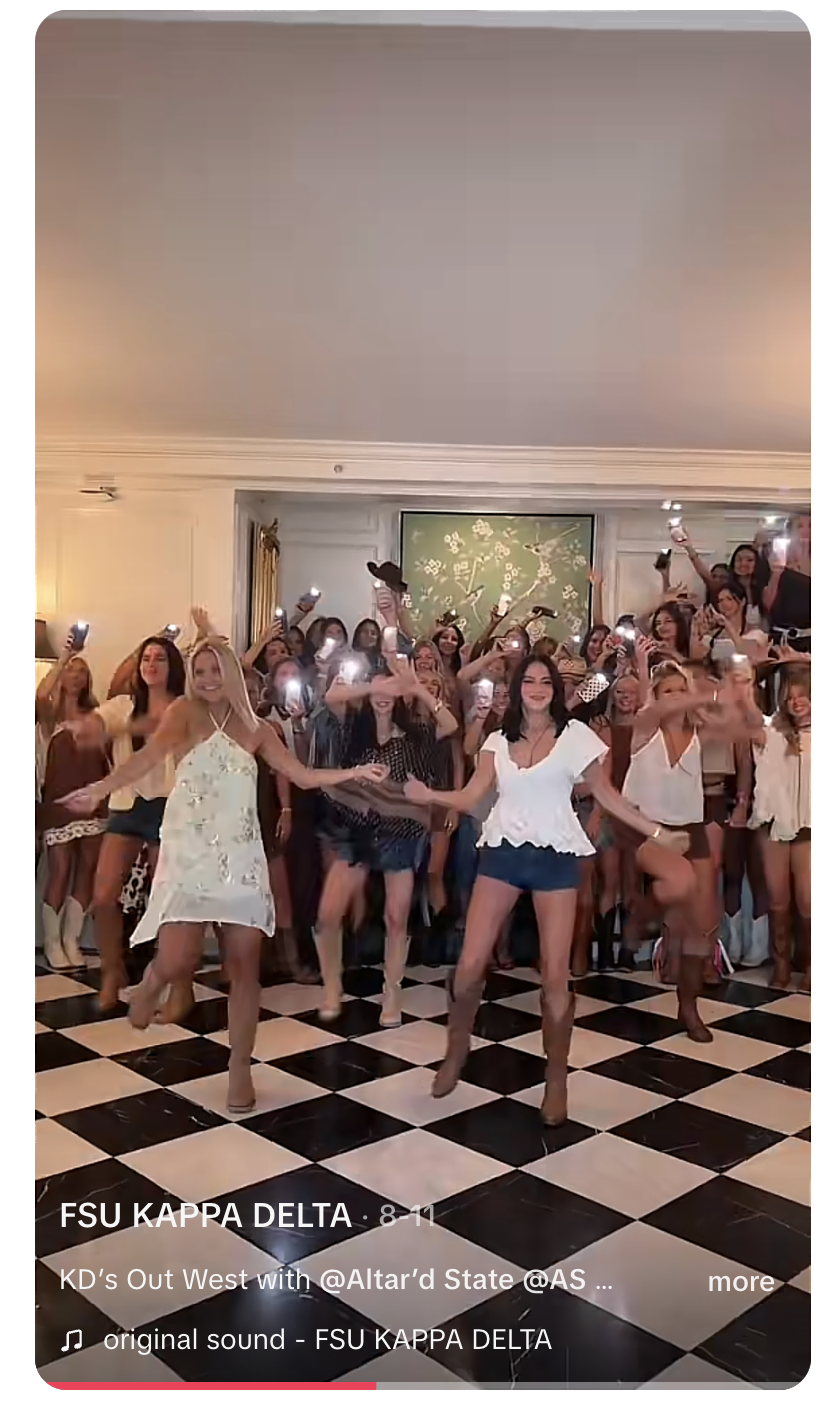
Non-traditional sponsors replaced heritage jewelry brands as the visible currency of rush. The Commercialization and Culture of Sorority Recruitment theme generated nearly 6,000 mentions (5,712 mentions). Chapters explicitly tagged sponsors—like ASU Delta Zeta thanking Nike (@Nike #teamnike) or FSU Kappa Delta partnering with Altar'd State—showing that Gen Z actively rewards brands that fund their content creators directly.
2. "Work Week" is the Unsung Content Engine
While most brands scramble to sponsor Bid Day, the Pre-Recruitment Sorority Prep topic generated 6,647 mentions with a high +36% net sentiment. Chapters treated setup week ("work week") as a core content pillar. Brands like Coca-Cola and the Dallas Cowboys Cheerleaders gained early, authentic exposure before the final recruitment market flooded.
3. The Internet Pushed Back on Extreme Wealth
The Sorority Rush Experience topic ran at a negative -28% net sentiment across 8,238 mentions. Non-Greek audiences and former participants actively called out the extreme financial barriers and overconsumption of sorority life, showing a clear limit to how much commercialized wealth spectators will tolerate.
4. Cultural Missteps Triggered Severe Backlash
The sharpest negative sentiment in the entire corpus hit the Cultural Reappropriation and Misinterpretation of Music theme at -69% net sentiment. When chapters co-opted Kendrick Lamar’s "Not Like Us" for sponsored dance routines, the internet called out the immediate tone-deafness. Brands that sponsored those routines shared in the reputational fallout.
The Tellagence Difference
If you analyzed #RushTok 2026 using standard keyword social listening tools, you would have seen a single bulk dataset showing 60.4K mentions and a +42% net sentiment score. You might have reported to leadership that brand participation was an unqualified victory.
Standard keyword tools collapse conversations into generic sentiment buckets. They miss context.
Tellagence Discover uses contextual intelligence to cluster conversation into distinct semantic stories. Instead of hiding outrage inside a massive positive average, Discover isolated the negative backlash directly to specific clusters:
The High-Engagement Win: Experiential setups and Bid Day joy (+89% net sentiment across 6,131 mentions).
The Isolated Landmine: Cultural reappropriation of music (-69% net sentiment).
By separating where the brand was celebrated from where it was causing reputational risk, Tellagence Discover allowed marketers to see exact boundaries without abandoning the platform.
Strategic Choices: Where do we go from here?
When activating on high-stakes cultural moments like #RushTok, brand marketers have clear strategic choices:
Option A: Sponsor the "Work Week" Setup Phase
Build authentic equity early. Focus your sponsorship on pre-recruitment prep (6.6K mentions, +36% net sentiment). It offers a less crowded, highly authentic window to support creators before the feed saturates.
Option B: Activate Exclusively on Bid Day for Pure Brand Safety
Eliminate cultural friction. Bid Day generated 6.1K mentions with an overwhelming +89% positive sentiment. Sponsoring post-reveal celebrations allows CPG, beverage, and decor brands to tap into pure, unscripted joy.
Option C: Mandate Cultural Vetting on Sponsored Content
Protect your brand equity. When funding student content, establish clear guidelines regarding soundtrack choices to prevent chapters from co-opting culturally sensitive trends that trigger internet backlash (-69% net sentiment).
Want to see Discover run a pulse report on your audience? Let's talk.
About This Report
This report was generated using Tellagence Discover, the contextual intelligence platform that transforms raw social listening data into structured, actionable audience clustering. Discover surfaces the underlying cultural narratives, brand risks, and hidden opportunities within massive online conversations.
To learn more about the science of contextual intelligence, visit tellagence.ai/science.
Ready to decode your brand's cultural impact? Contact our team at tellagence.ai/contact.